

We’re Ali and Muizz, and we rent out rooms in four shared homes in Austin and Manor. We get asked these questions on intro calls and tours every week, and we’ve lived in shared homes ourselves. Here’s what to ask, why each question matters, and how we answer them for our own homes, so you have something real to compare against.
What questions should I ask before renting a room?
These are the ten questions we’d ask if we were renting a room in Austin, roughly in the order they come up:
- Are utilities included, and what do they cover?
- Does the landlord live in the house?
- Is the room furnished?
- How does parking work, and does it cost extra?
- What do I need to qualify?
- Is my lease for my room only, or for the whole house?
- Are there discounts for a longer lease?
- Who would I be living with, and what happens if we don’t get along?
- How long is the commute at rush hour?
- Can I see the room before I pay anything?
Are utilities included in the rent?
Utilities are the question everyone asks first, and for good reason: they change your monthly cost more than almost anything else. “Utilities included” can mean very different things. On 26 October 2026, 206 of the 364 Austin rooms on Roomies (57%) were marked “bills included.” We opened 105 of those listings, and 89 never said whether that covered electricity, water, or gas. Only a handful mentioned lawn care (5), a cleaning service (6), or pest control (2).
Ask exactly what’s covered and what a typical month costs. Then ask what it costs in July and August. Austin summers mean the AC runs constantly, and in our experience, the jump in summer bills is what catches renters off guard most.
In our homes, utilities aren’t part of the rent. They’re set up for you and split evenly, typically $100 to $150 a month per room depending on the month, and the share covers more than most listings do:
| Compare | Why it’s in there |
|---|---|
| Electricity, water, gas, and trash | Split evenly from the actual bills, so no one has to track who used what. That includes the standard charges that come with any utility account, like the monthly base charge, the same ones you’d pay on a place of your own. |
| Internet | One fast connection for the whole house, so you don’t set up your own plan or argue over whose name it’s in. |
| Lawn care | In most house rentals, the tenants mow and keep up the yard themselves. In ours, it’s done for you. |
| Pest control | Also usually left to the tenants in a house rental. We handle it, so you don’t have to. |
| Monthly cleaning of shared areas | On top of that, a professional cleaner does the kitchen, living areas, and other shared spaces every month. |
Typically $100 to $150 a month per room, split evenly and higher in the summer months.
Residents notice the difference. One wrote in their move-out feedback: “The cleaners and lawn maintenance team kept everything nice and comfortable. There were never any pest issues the entire time I lived there.”
Does the landlord live in the house?
Ask whether the landlord lives there, because it changes what living there feels like. A live-in landlord can be a good thing: you get answers directly, you know exactly who you’re living with, and some people become good friends with theirs. But we’ve also heard plenty of stories about live-in landlords who micromanage the household so much that it never feels like home.
We don’t live in most of the homes we rent out. We keep a room in one of them but are rarely there, and we don’t micromanage. Instead, tours are often led by one of the current housemates when someone’s available, so you get a firsthand sense of what it’s like to live there and meet the people you’d be living with.
Is the room furnished?
Ask whether the bedroom is furnished, and which common areas are. Both have trade-offs:
- Furnished: easy if you’re moving from out of state or staying for an internship, with nothing to buy or move. It usually costs a little more, and you’re living with someone else’s choice of bed and desk.
- Unfurnished: a little cheaper, and you can set the room up your way. You’ll need to buy or bring a bed and furniture, which adds to your move-in cost.
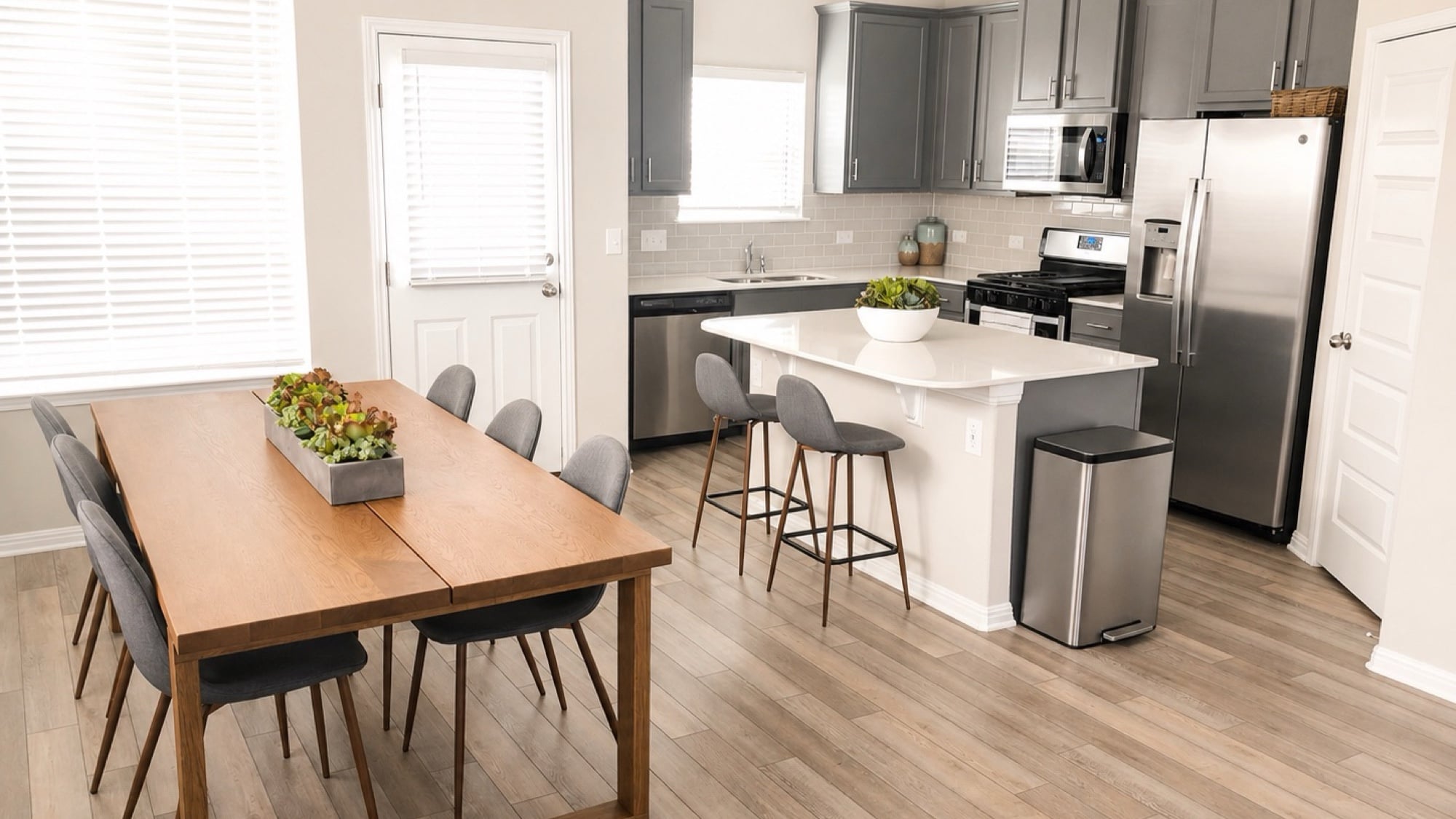
In our homes, the kitchen, living room, and dining room are furnished in every house, so there’s no couch or kitchen gear to buy. Some bedrooms come furnished and others don’t, and furnished bedrooms cost slightly more. Each room’s page says which it is, and you can filter for furnished bedrooms on our open rooms page.
How does parking work?
Ask where you’d park, whether you’re guaranteed a spot, and whether it costs extra. Some Austin apartments charge monthly for a parking spot or garage, and street parking in central Austin can mean meters or permits.
Every one of our homes has garage, driveway, and street parking, and it’s first come, first served: the garage if there’s room, otherwise the driveway or the street. Parking doesn’t cost extra, and there are no meters to feed on our streets.
What do I need to qualify for a room?
Ask about the minimum requirements up front, before you pay an application fee. They vary a lot from landlord to landlord: some ask for very little, and some co-living companies have no minimum credit score.
For our homes, you’ll need a credit score above 650, income of at least 3 times the rent, no evictions, and a clean background check, along with a photo ID for the application. The application fee is $50. Ask about house rules at the same time. Ours are simple: no pets, no smoking, and one person per room.
Is the lease for my room or the whole house?
Ask whether you’d sign a lease for your room only or share one lease for the whole house with the other tenants. It sounds like a detail, but it matters a lot if things go wrong.
Many of the people who move into our homes are coming from a bad roommate experience. Often they found someone to rent with, signed a shared lease, and then had a falling-out. On a shared lease, you can end up responsible for the whole home’s rent, including someone else’s share if they leave or stop paying.
We rent per person, per room. Your lease covers your room and your rent, so you’re never on the hook for a housemate’s share.
Are there discounts for a longer lease?
Ask how the price changes with the lease length. Landlords generally charge more for short leases, because they’ll have to find a new tenant sooner, and some offer a better rate for staying longer.
The prices on our site are for year-long leases. For leases longer than a year, we offer further discounts, and the price is negotiable. Shorter terms may cost more, and if you’re here for an internship or co-op, our short-term lease guide explains how that works.
Who would I live with, and what if we don’t get along?
Ask who the current housemates are, what they do, and how long they’ve been there. If you can, meet one of them on the tour. Ask about their schedules, guests, and how shared spaces are kept clean.
Then ask what happens if it doesn’t work out. Even in a good house, disagreements between housemates come up. It’s normal when people share a kitchen. What matters is what you can do about it. In our homes, residents on leases of 6 months or more can move to an open room in another one of our homes if their current home stops fitting. Ask us how it works.
Most of the time, it works out. One resident who stayed more than two years wrote: “The house is well-maintained, the landlords are responsive, and it offers a great mix of privacy and community. I’ve made great friends while having my own space.” In move-out feedback, 16 of 17 residents said they’d recommend us to friends. Read their reviews.
How long will my commute really be?
Ask about the drive to work at the time you’ll actually be driving it. A commute that looks short on a map can be a lot longer at rush hour in Austin, especially if it involves I-35. If your route uses I-35, leave early.
Our employer guides list door-to-door drive times from different parts of town to Austin’s big employers.
What are red flags when renting a room?
The biggest red flag we see is a landlord asking for money before they’ve offered you a tour, in person or by video. Some renters choose to skip the tour, and that’s fine, but it should be your choice, not the landlord’s. A real landlord will happily show you the room and answer your questions before you pay.
A few others to watch for:
- Vague answers about utilities, the lease, or who else lives there.
- A shared lease presented as “just a room.” Make sure you know what you’re signing.
- Rent far below similar rooms nearby, especially from someone who says they’re out of town.
Our guide to finding a room in Austin has a full scam checklist, including how to look up who owns a property.
How do I stand out to a landlord when renting a room?
Start looking early and come ready. From our side, the applicants who stand out have their details ready, like recent pay stubs, are happy to fill out an application, and reach out well before their move-in date. Good rooms go quickly, and being ready to apply when you find one makes a real difference.
When you’re ready, see our open rooms or fill out the interest form with your move-in date and where you’ll be working.
Frequently asked questions
What questions should I ask when renting a room in someone’s house?
Ask what the monthly cost is with utilities and what they cover, whether the landlord lives there, whether the room is furnished, how parking works, what you need to qualify, whether the lease covers just your room, and what happens if you don’t get along with a housemate.
Are utilities usually included when renting a room in Austin?
Often, but “included” means different things. In October 2026, 57% of the Austin rooms on Roomies were marked “bills included,” and most of those listings didn’t say which utilities that covered. Ask exactly what’s covered and what a summer month costs.
How much are utilities for a room in Austin?
In our homes, utilities are split evenly and typically run $100 to $150 a month per room, covering electricity, water, gas, trash, internet, pest control, lawn care, and monthly cleaning of shared areas. Summer months run higher because of air conditioning.
Is it better to rent a room from a live-in landlord?
It depends on you. A live-in landlord can be easy to reach and friendly, but some micromanage the household. Ask how involved they are day to day, and if possible, talk to a current housemate before you sign.
What is a red flag when renting a room?
A landlord asking for money before offering you a tour, in person or by video. Skipping a tour should be your choice. Vague answers about the lease or utilities, and rent far below similar rooms, are also warning signs.
What should I bring to apply for a room?
Have a photo ID and proof of income, like recent pay stubs, ready, and be prepared to fill out an application with a background check. Applying early, with your details ready, helps you get the room you want.